
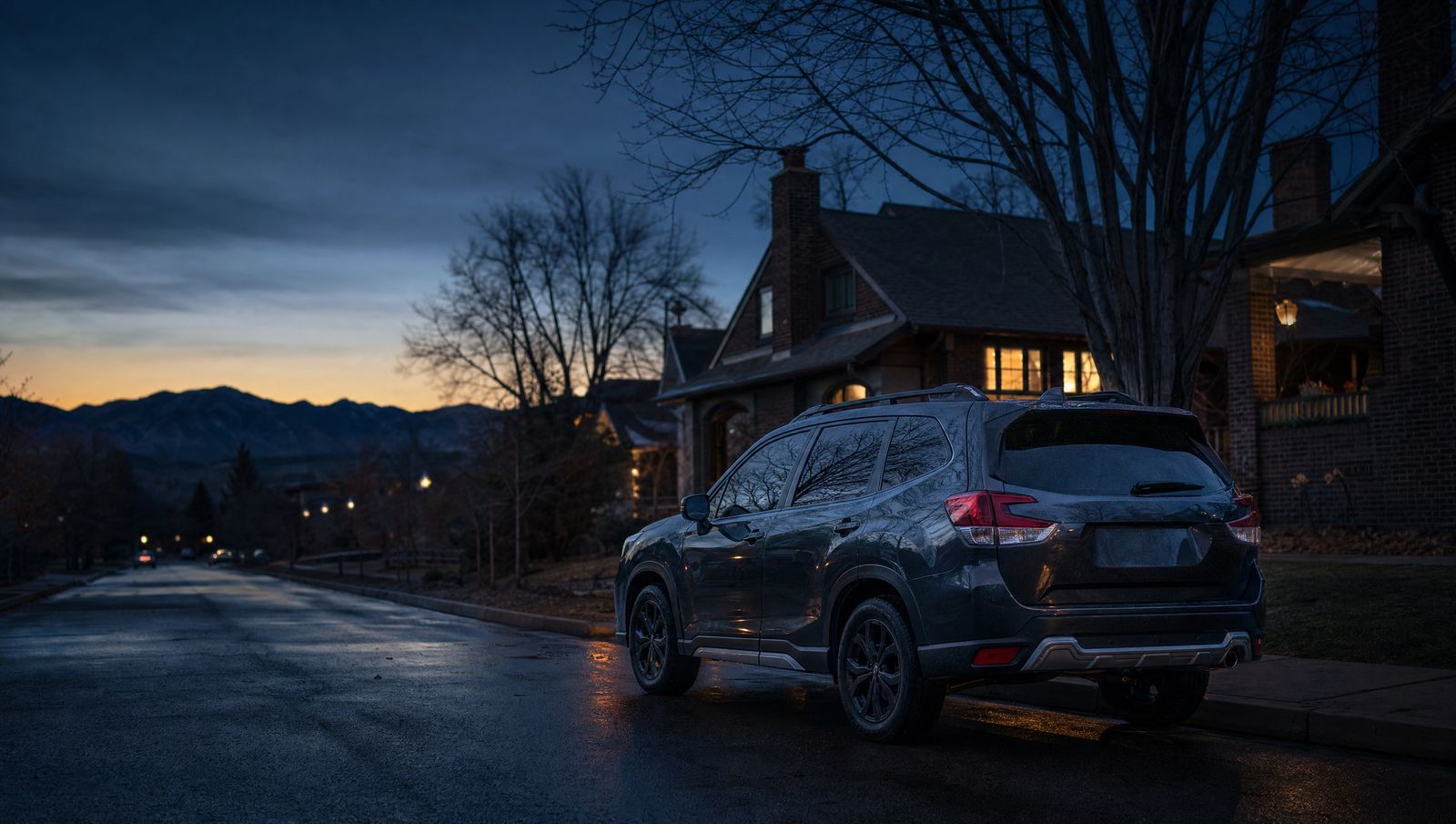
Independent buyer's guide · Denver metro · We do not sell cars
Denver Used Car Buying Guide
Buy with your eyes open.
Checklists, comparisons and Colorado paperwork steps written for people spending their own money. No inventory, no sales pitch, no financing offers. Just the questions to ask before you sign.
Illustrative footage, not a vehicle for sale
The buying sequence
Six steps from listing to plates
Most expensive mistakes happen when buyers skip a step or take them out of order. Scroll through them in the order most purchases happen.
-
Step 1 · Budget and fair price
Set a real budget: start with the out-the-door number, not the sticker.
The asking price is only one line. Sales tax, registration and ownership tax, dealer fees, an inspection and the first round of repairs all land in the first few weeks. Work out the full figure before you fall for a specific car.
- Total the purchase price plus tax, fees and registration
- Hold back money for tires, brakes and fluids
- Check pricing guides for the exact trim and mileage
- Decide your walk-away number before you look
-
Step 2 · Dealer or private seller
Choose who to buy from: each route trades price for protection differently.
Licensed dealers handle title paperwork and must post a federal Buyers Guide on the window. Private sellers often ask less and know the car's history firsthand, but every check and form becomes your job.
- Read the Buyers Guide: "as is" or warranty
- Watch for unlicensed sellers posing as private owners
- Confirm the seller's name matches the title
- Take the five-question quiz in the guide
-
Step 3 · History and title checks
Run the VIN: a ten-minute check that rules out the worst cars.
Match the VIN on the dash, the door jamb and the title. Then run it through the free federal recall lookup, a theft and total-loss check, and a history report that draws on title records.
- Look for salvage, flood or rebuilt brands
- Compare odometer readings over the years
- Check for open safety recalls
- Ask about any gaps in ownership
-
Step 4 · Inspection checklist
Inspect and test drive: use your own eyes first, then a mechanic's.
Walk around the car in daylight, check fluids cold, listen to a cold start and drive it on the highway and on rough pavement. Mark each item in the interactive checklist and bring your concerns to an independent shop.
- Cold start: noise, smoke, warning lights
- Tire wear pattern and tread depth
- Highway speed, braking and turning
- Independent pre-purchase inspection
-
Step 5 · Cars for Colorado driving
Match the car to Colorado: altitude, hail, deicer and grades all leave marks.
Front Range cars face hail, a dry high-altitude sun, magnesium chloride on winter roads and long mountain grades. Each one leaves clues you can check before you buy.
- Hail dents on roof, hood and trunk
- Undercarriage corrosion from winter deicer
- Tires that meet the I-70 traction law
- Brake and transmission health for mountain miles
-
Step 6 · Colorado paperwork
Handle the paperwork: title, emissions, insurance and registration.
In a private sale the title transfer is on you: a signed title, a bill of sale, proof of insurance, an emissions result where required, and a visit to your county motor vehicle office within the state deadline.
- Seller signs the title over to you
- Emissions test if the car needs one
- Insurance before you drive away
- Register and pay tax at your county
The inspection, in three moments
More than a test drive
The engine is cold. The seller is talking. You have about forty minutes to learn what the last few years did to this car. Most of the answer comes from three moments.
-
The walkaround.
Daylight, a flashlight and a slow lap. Sight down the roof for hail, check the VIN on the dash and the door jamb, read the tire wear and look under the rockers for deicer damage.
-
The cold start.
Ask the seller not to warm it up. A true cold start is when lifter tick, rough idle, smoke and slow cranking show themselves, and when warning lights should come on and then go out.
-
The test drive.
Twenty to thirty minutes: city streets, a highway on-ramp, rough pavement and a firm stop from speed. Listen for clunks, feel for pulls, and watch the temperature gauge once it is fully warm.
Why Denver is different
What the Front Range does to a car
A car that spent five years here has a different wear story than the same model from a coastal city. Open each panel for the marks worth looking for first.
-
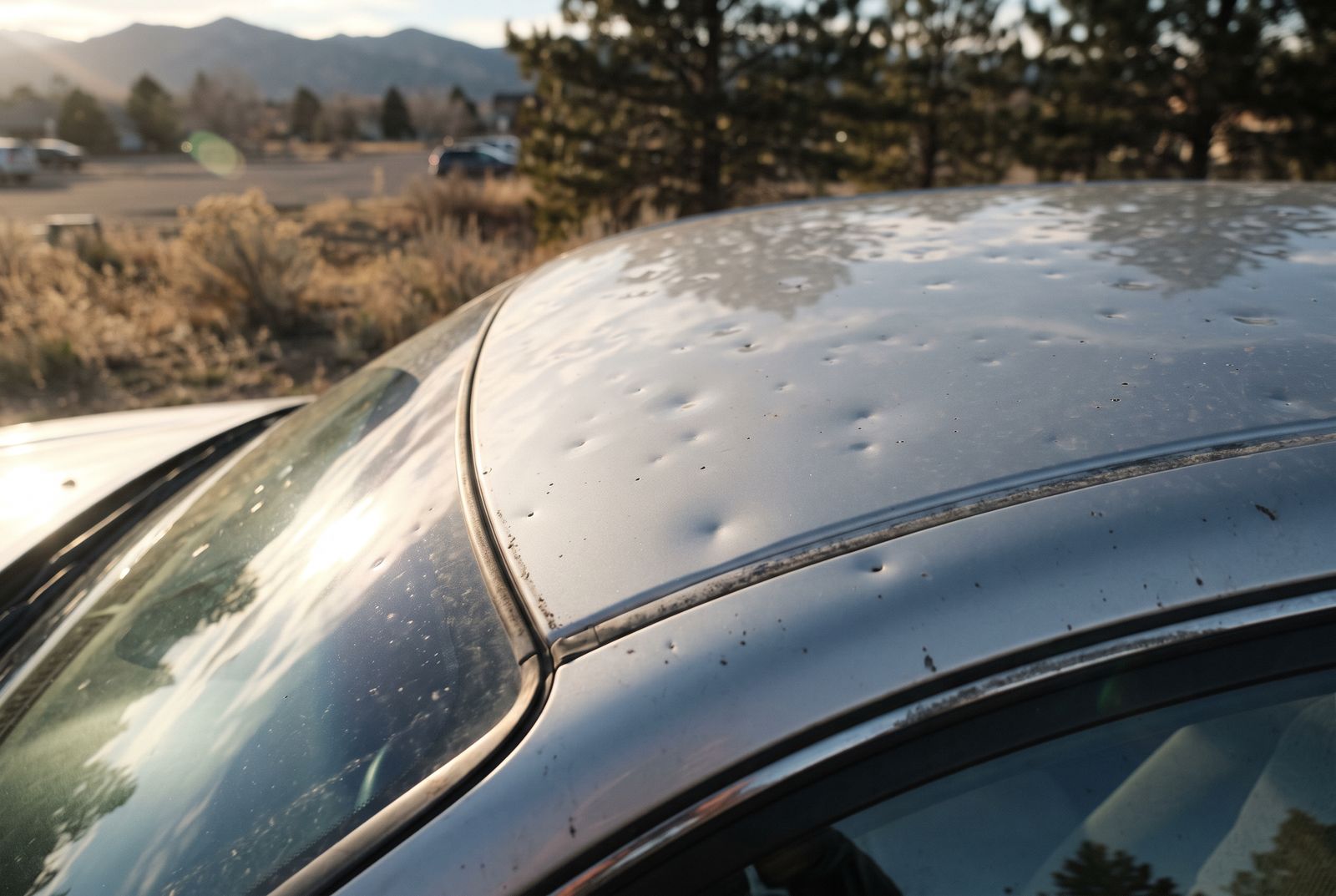
Hail
Dimples in the roof line
The Front Range sees frequent summer hail. Sight down the roof and hood at a low angle; dents read as rows of soft dimples. Ask about insurance claims and repairs.
How to spot hail repair -
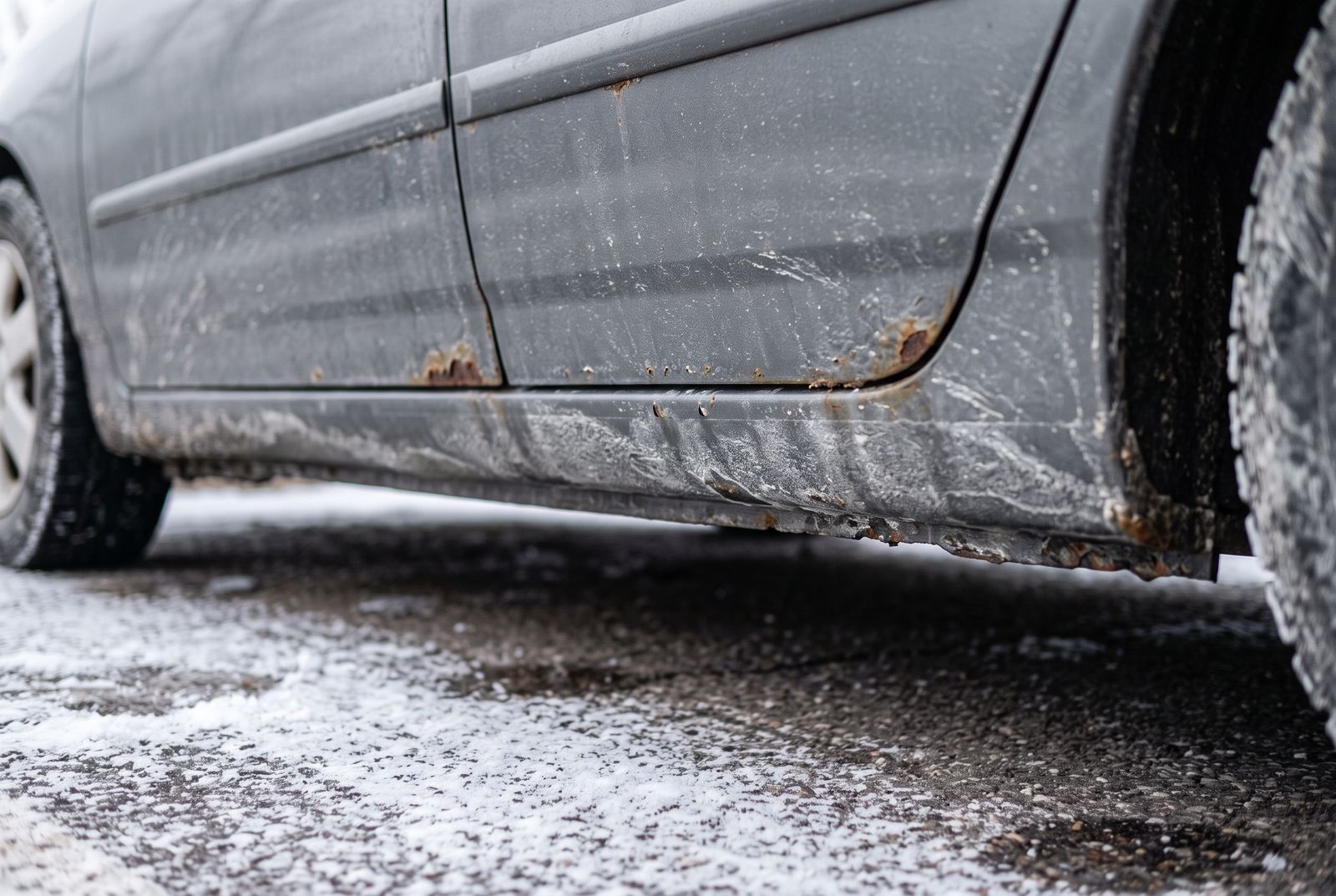
Winter deicer
Corrosion underneath
Colorado roads are treated with liquid magnesium chloride in winter. The dry climate spares most body panels, but brake lines, rockers and subframes take the hit.
Where to look under the car -
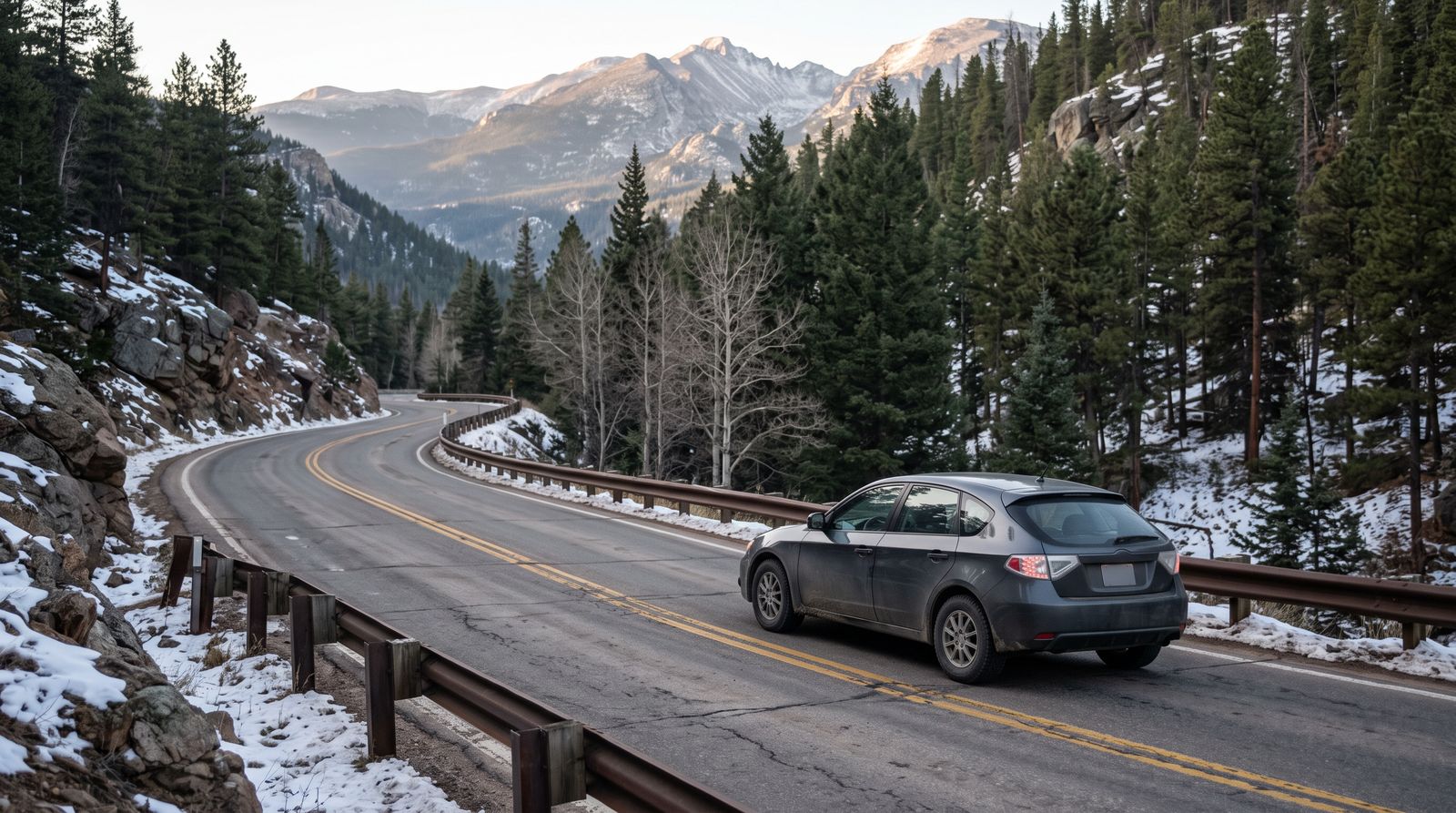
Mountain miles
Grades, altitude and tires
Long I-70 descents load up brakes and transmissions, thin air saps power from non-turbo engines, and the state traction law sets a minimum tire tread for mountain driving.
Mountain driving checks -
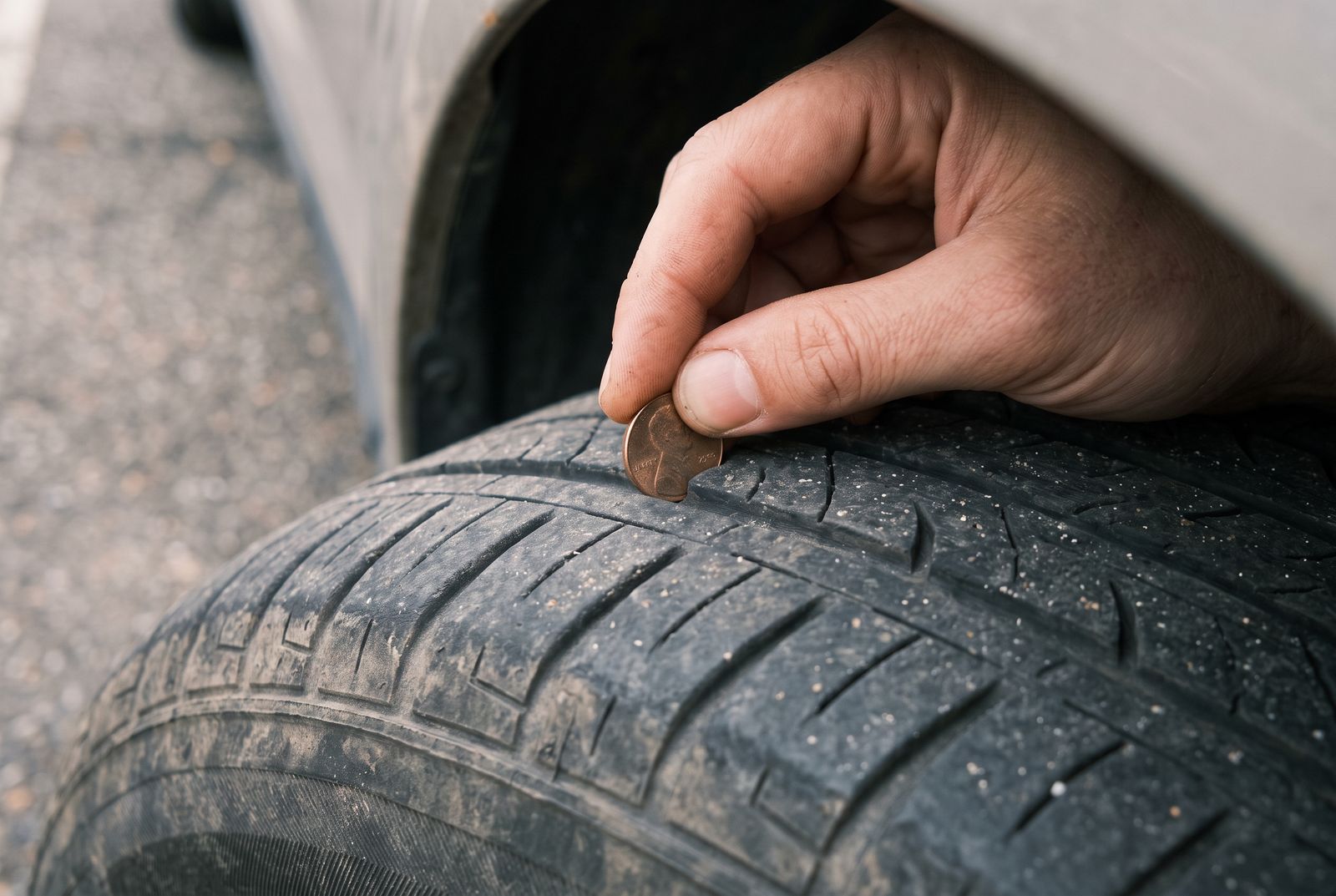
Tires
Tread depth and wear pattern
Uneven wear points to alignment or suspension problems, and worn tread can fail the traction law on I-70. A coin or a cheap gauge tells you what new tires will add to the price.
Use the tire checks
Generated illustration photos are used throughout this site to show what to look for. They are not photos of specific vehicles for sale.
Walk-away signals
Eight red flags
Some problems are bargaining points. These are different: each one points to a hidden cost, a title problem or a seller who is not being straight with you. Any one of them should end the conversation.
Run the full checklistThe name on the title is not the seller's
A private seller should hand you a title in their own name. Anything else suggests an unlicensed reseller or a title problem.
The VINs do not match
The number on the dash, the driver door jamb and the paperwork should be identical. A mismatch is a hard stop.
No inspection allowed
A seller who will not let an independent mechanic look at the car is protecting something.
The engine is already warm when you arrive
A pre-warmed engine can hide hard starting, rough idle, lifter noise and smoke that only show on a cold start.
Warning lights that come and go
A check-engine light that is off now but whose code reader shows "not ready" monitors may have been cleared recently.
Milky oil or sweet-smelling exhaust
Both can point to coolant where it does not belong, often a head gasket. That repair can exceed the value of an older car.
A branded title the seller did not mention
Salvage, rebuilt or flood brands change value, insurability and resale. Run the history report before you meet.
Pressure to pay today, in cash, somewhere odd
Real sellers can wait a day for an inspection. Meet in daylight, in a public place, and pay in a traceable way.
Six buyer's guides
Everything to check, in order
- 01 Budget and Fair Price Out-the-door math and how to tell a fair asking price
- 02 Dealer or Private Seller What each route gives you, and what it leaves to you
- 03 History and Title Checks VIN reports, title brands, recalls and odometer records
- 04 Inspection Checklist An interactive walkaround and test-drive checklist
- 05 Cars for Colorado Driving Altitude, hail, mag chloride, snow and I-70 grades
- 06 Colorado Paperwork Title, emissions, sales tax and registration steps
Common questions
Denver used car questions
Do I need an emissions test to register a used car in Denver?
Many vehicles registered in Denver and the surrounding metro counties are part of the state emissions program run through Air Care Colorado, though the newest model years and some vehicle types are exempt. If the car you are buying needs a test, plan on a current passing result before the county will register it in your name. Check the specific VIN on the Air Care Colorado site before you buy. The Colorado paperwork guide walks through the order of steps.
How long do I have to register a car after buying it in Colorado?
Colorado gives buyers a limited window after the purchase date to title and register the vehicle, and late fees apply once that window passes. The window has historically been 60 days, but confirm the current rule with your county motor vehicle office, because fees and deadlines are set in statute and can change.
When do I pay sales tax on a private-party car purchase?
In a private sale there is no dealer to collect tax, so you pay it when you title and register the car at your county office. The rate depends on where you live, not where the seller lives. Budget for it up front with the out-the-door calculator.
Is a pre-purchase inspection worth it on an inexpensive car?
Usually, yes. The cheaper the car, the less room you have to absorb a surprise repair, and an independent mechanic can spot leaks, frame damage, worn suspension parts and stored trouble codes that a test drive will not reveal. A seller who refuses to let a mechanic look at the car has answered a different question for you.
What should I bring to look at a used car?
A flashlight, a paper towel for checking fluids, a tread depth gauge or a coin, a small magnet for body filler, and a phone with our interactive checklist open. If you can borrow an OBD-II code reader, bring that too. Ask the seller not to start the engine before you arrive so you can hear a true cold start.
Should I buy from a dealer or a private seller?
Neither is automatically safer. Licensed Colorado dealers must follow state licensing rules and the federal Used Car Rule, and they handle the title work. Private sellers often ask less but leave every check and every form to you. The dealer or private seller guide has a short quiz that weighs your situation.
Is all-wheel drive necessary in Denver?
Not for everyone. Plenty of people get through Denver winters with front-wheel drive and good winter tires. If you drive I-70 to the mountains often, the state traction law and steep grades change the math. The Colorado driving guide covers tires, drivetrains and altitude in detail.
How can I tell if a car has hail damage?
Look at the roof, hood and trunk lid at a low angle in daylight, ideally with a reflection of a straight line such as a building edge running across the panel. Hail dents show up as rows of small, round dimples. Ask whether there was an insurance claim and whether the title carries any brand from it.
How do I know if an asking price is fair?
Compare the exact year, trim, mileage and condition across several pricing guides and against similar cars currently listed in the Denver area. Then subtract what the inspection says the car needs. A fair price is the market value minus the work the car is about to cost you.
What should a vehicle history report tell me?
Title brands such as salvage, flood or rebuilt, odometer readings over time, reported accidents and the number of owners. Reports miss plenty, especially accidents that never reached insurance. The history and title guide explains which free federal tools to run alongside a paid report.
No questions match that search. Send us yours.
Stuck on a specific car?
Tell us what you are looking at
Send the listing, the history report result or the question that is bugging you. We reply by email with what we would check next.
Send a question